Investor Community Newsletter 2024 – 2026
A recap on our journey so far throughout 2024 through…
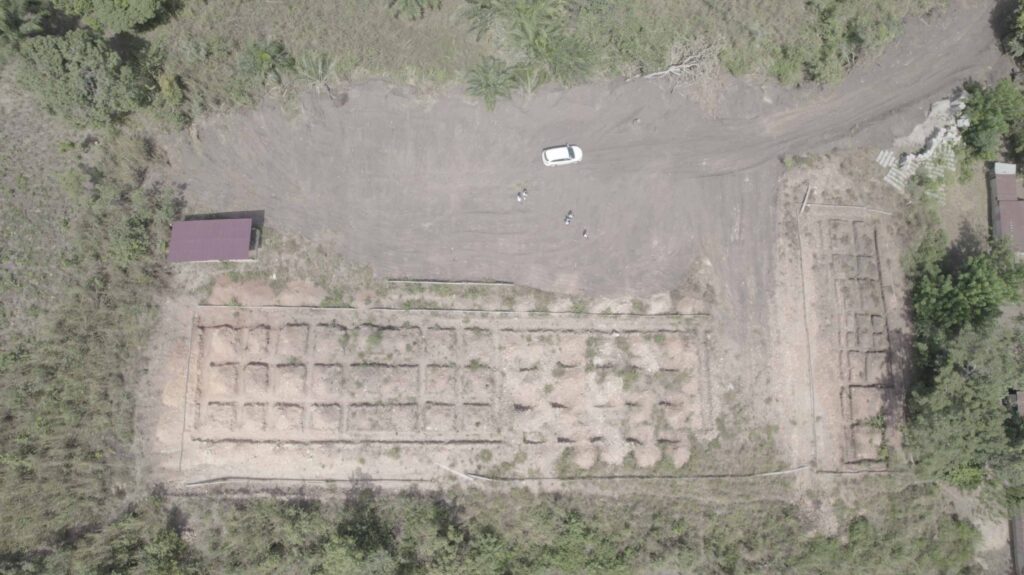
From an idea in 2024 to preparing for our first commercial production in Q4 2026.
To our investors, partners, supporters and everyone who has recently discovered Eggcellent Farms through our online campaign, welcome.
It’s been quite a journey getting to this point.
What started as an idea in 2024 has gradually developed into a physical agricultural project in Ghana’s Volta Region. We’ve acquired land, changed direction, redesigned our plans, dealt with construction difficulties and spent considerable time working out how to build a business that can grow sustainably.
Not everything has gone according to plan. Some decisions have cost us time and money, and we’ve had to reconsider things we initially thought we’d got right.
But those experiences have also shaped the business we’re building today.
With our first production phase now being prepared for launch in Q4 2026, we wanted to take this opportunity to share the full journey, from where we started to where we stand today.
This is our progress so far.
Year one: establishment and first investment
Eggcellent Farms began with a question I’d been asking myself for some time.
After years of entrepreneurship in the UK, I wanted to build something with a longer-term purpose. Something commercially viable that could also create opportunities for people beyond myself.
Agriculture in Ghana presented an opportunity to do that.
The idea was to build a modern poultry business capable of producing eggs commercially while creating employment, supporting local supply chains and eventually developing opportunities for young entrepreneurs.
At this stage, the vision was still developing. We knew what we wanted to achieve, but we hadn’t yet worked through every detail of what it would take.
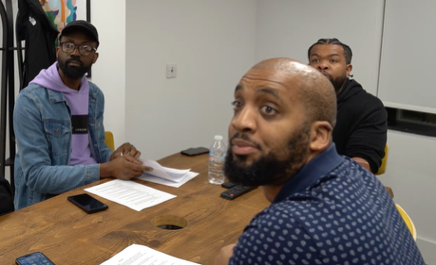
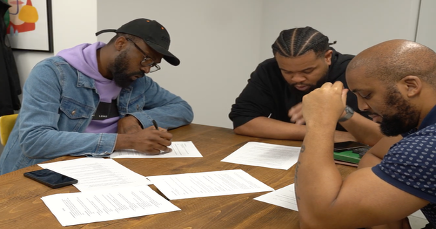
One of our first major steps was formally incorporating Eggcellent Farms Ltd in the United Kingdom in July 2024.
The company now had a legal identity, and we could begin turning our plans into something tangible.
Milestone achieved: Eggcellent Farms Ltd incorporated
July 2024, the business formally established.
Securing our first piece of land felt like a significant achievement.
After months of planning, we finally had a physical location where Eggcellent Farms could begin taking shape.
The initial site was approximately one acre, and at the time, our immediate focus was getting started.
We were excited about having land, beginning development and moving beyond the planning stage.
What we didn’t yet appreciate was how restrictive that location would become as our plans evolved.
It wasn’t until March and April 2025 that we began to understand the full extent of those limitations.
At the end of 2024, however, we had taken our first major steps: the company was established, the initial land had been acquired and we had begun laying the groundwork for development.
We had made a start, but we still had a great deal to learn.
Year two: reassessment and relocation
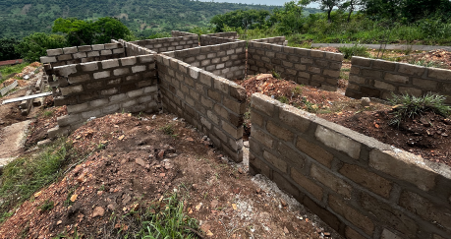
If 2024 was about getting started, 2025 was about discovering what it would actually take to build Eggcellent Farms.
This was the year when some of our original assumptions were challenged.
We had to reconsider our land, our construction plans, our budget and ultimately the location of the business itself.
It wasn’t the year we’d originally imagined, but it changed the direction of the company.
As we moved further into planning and assessing the construction requirements, several problems with the original site became increasingly apparent.
The first was its size.
At approximately one acre, the land simply wasn’t large enough to accommodate the business we were developing.
Our plans now extended well beyond a single poultry house. We wanted room for additional poultry facilities, feed production, storage, staff accommodation, water infrastructure and future expansion.
There was no realistic way to accommodate all of that on the original site.
The second problem was construction cost.
The characteristics of the land meant we were facing considerably higher development costs than anticipated. We risked spending a significant amount of our available capital simply making the site suitable for construction.
The third issue was road access.
Commercial poultry production requires the regular movement of feed, equipment, employees and eventually large quantities of eggs.
The access to the original site wasn’t appropriate for the scale of operation we wanted to establish.
These issues forced us to reconsider the entire project.
Were we investing money into building the farm, or were we investing money into fighting the limitations of the land?
The more we assessed the situation, the clearer it became that continuing with the original site would create problems that could follow us for years.
This was a difficult decision.
We’d already invested time, money and energy into the first location. Moving meant accepting that some of our earlier decisions hadn’t been right for the long-term business.
It also meant delays.
We had to revisit our plans, reassess the capital required and begin looking for a location that could support what Eggcellent Farms was becoming.
But continuing to invest in land we knew was unsuitable would only have compounded the problem.
One of the biggest lessons from this experience was that the money already spent couldn’t be the reason to keep spending more.
We needed to make decisions based on the future of the business, rather than trying to justify decisions made in the past.
Land wasn’t our only challenge.
Our construction experience also exposed weaknesses in how work was being managed and delivered.
We encountered contractor delays, workmanship concerns and situations where the quality of work required closer scrutiny.
Some work needed to be questioned and reassessed rather than accepted simply because it had been completed.
This was frustrating, particularly when we were trying to maintain momentum.
It also had financial implications. Delays and remedial work meant additional pressure on our development budget.
These experiences changed our approach to construction.
We began placing much greater emphasis on contractor accountability, clearer specifications, closer supervision and verifying the quality of completed work.
We learned that construction progress isn’t simply about how quickly a structure goes up.
It’s about whether that structure is safe, suitable and capable of doing the job it was designed for.
Building something properly once is far better than paying to build it twice.
Alongside these challenges, we continued developing the financial foundations of Eggcellent Farms.
Our early investors committed capital to support the project, helping us progress from planning towards land acquisition and physical development.
That support has been particularly important during a period when the business has had to make difficult decisions and adapt its original plans.
It also reinforced our responsibility to ensure that capital was being deployed towards assets and infrastructure that would genuinely support the long-term business.
The setbacks we experienced made that responsibility even clearer.
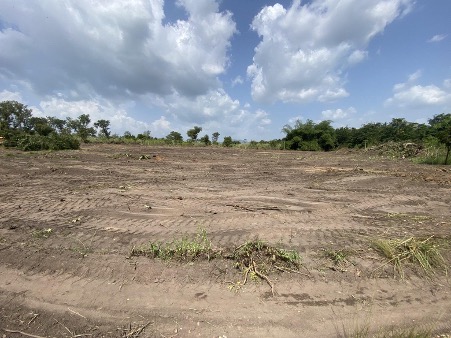
Towards the end of 2025, we reached one of the most important milestones in our journey.
We acquired a new site in the Matse area of Ho, in Ghana’s Volta Region.
This was a very different opportunity from our first acquisition.
Instead of trying to fit the entire business onto a single acre, we now had a substantially larger site that could accommodate the wider Eggcellent Farms vision.
We could begin thinking properly about how the different parts of the farm would work together.
Poultry houses could be positioned with future expansion in mind.
Feed production and storage could have dedicated areas.
We could allocate space for duckweed, Black Soldier Fly production, agricultural growing systems and staff facilities.
Most importantly, we had the opportunity to plan beyond our first flock.
For the first time, the land and our long-term ambition were much more closely aligned.
Major milestone: new farm site acquired
Late 2025, Matse, Ho, Volta Region.
A larger site with space for integrated agricultural infrastructure and future expansion.
By the end of the year, we had achieved something important, even though the journey had taken a different direction from the one we’d originally planned.
We had recognised the limitations of our first site, made the decision to relocate and secured land better suited to the business.
We’d also learned valuable lessons about construction, contractor management and capital allocation.
The next challenge was turning that new opportunity into a working farm.
Year three: construction and launch preparation
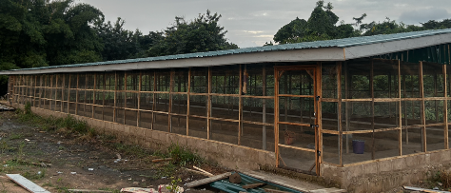
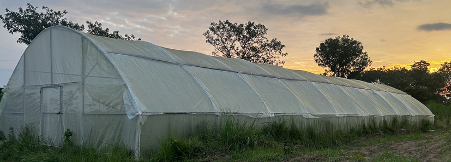
2026 has been about taking everything we’ve learned over the previous two years and putting it into practice.
With a more suitable site secured, our attention shifted towards developing the infrastructure, refining the production model and preparing Eggcellent Farms to begin operating commercially.
The focus has also changed.
Rather than attempting to launch at a scale that would require substantial upfront capital, we’ve been working towards a more manageable first phase that allows us to establish operations, gain practical experience and expand from a stronger foundation.
Our goal is to move from construction and planning into actual poultry production in Q4 2026.
One of our first priorities was establishing how the new site would be developed.
We needed to consider not only the poultry houses but also how the wider agricultural operation would function.
Our masterplan has incorporated dedicated areas for:
We also considered the positioning of water infrastructure, electricity, internal access and future poultry houses.
This planning was important because we didn’t want to repeat the mistakes made with our original site.
The objective was to develop a layout that would accommodate our immediate requirements without restricting future growth.
Feed has become one of the most important areas of our operational planning.
It is a major expense in poultry production, and relying entirely on externally manufactured feed would leave us exposed to fluctuations in ingredient prices and supply.
We therefore began exploring how we could progressively bring more of the feed supply chain under our own control.
Our approach has developed around several complementary systems.
We intend to purchase maize from local farmers and combine it with other ingredients to formulate feed suited to our birds’ nutritional requirements. This gives us an opportunity to support local agricultural producers while developing greater control over our own feed procurement.
We’ve explored the potential for Black Soldier Fly larvae to contribute to our protein requirements and help us make productive use of suitable organic materials.
Duckweed has been incorporated into our longer-term feed development plans as a potential supplementary ingredient.
We’ve also explored maize fodder, moringa and other crops that could contribute to the wider farming ecosystem.
These systems will need to be introduced carefully, with feed formulations meeting the nutritional requirements of the birds.
Our immediate priority is to establish a reliable conventional feed formulation using locally sourced ingredients where practical.
The alternative feed systems can then be developed and assessed progressively.
We don’t expect to eliminate purchased feed ingredients overnight.
But the work undertaken this year has given us a clearer understanding of how we can begin reducing our exposure to external supply chains over time.
Alongside the physical development of the farm, we’ve continued working on the numbers behind the business.
We’ve developed models covering production capacity, feed consumption, staffing, equipment, operating costs, working capital and future expansion.
Our earlier plans considered launching with considerably larger numbers of laying birds.
However, as we reassessed the capital required and the practicalities of bringing the farm into operation, we decided to adopt a more measured approach.
Rather than committing immediately to tens of thousands of birds, our first phase will focus on establishing the operation at a smaller scale.
This will allow us to test our systems, develop the team, establish our distribution channels and understand our actual operating costs before expanding.
It’s an important change from our original plan, but one that gives us the opportunity to build the business progressively.
Construction has continued to be a major focus throughout 2026.
Our priority has been preparing the infrastructure required to accommodate the first flock and support daily operations.
This includes poultry housing, water supply, electricity, storage and the equipment required to manage the birds.
We’ve also continued applying the lessons learned from our earlier construction experiences.
Quality, suitability and proper supervision remain important considerations as we work towards making the facilities operational.
Although we would have liked to reach this stage sooner, we are now concentrating on completing the essential infrastructure required for launch rather than attempting to develop every element of the masterplan simultaneously.
The wider agricultural ecosystem remains part of our long-term vision, but the immediate priority is getting the first phase operating successfully.
Our first production phase
One of the most significant decisions we’ve made this year has been confirming the size and structure of our initial flock.
Rather than launching immediately with the much larger layer operation originally envisaged, we’ve established a smaller first phase consisting of both layers and broilers.
Total initial flock: 3,000 birds
Both groups will initially be raised using deep-litter housing, in separate facilities.
Our plans for A-frame cage systems remain part of the longer-term layer expansion strategy, rather than the immediate launch.
We have also been working through the practical requirements of introducing the birds, including their age at purchase, equipment, staffing and feed requirements.
This smaller launch allows us to concentrate on establishing the operation before committing to the next phase of growth.
A poultry farm needs much more than buildings and birds.
We’ve been developing the staffing structure and operational requirements needed to manage our first flock.
Our launch planning has considered an eight-person team, with responsibilities covering farm management, poultry care, feed preparation, cleaning, security and supporting operations.
We’ve also worked through the equipment required for both layers and broilers, including feeders, drinkers, brooding and temperature-management equipment, weighing scales, cleaning tools and essential biosecurity supplies.
Feed budgeting has been another important part of this preparation.
We’ve been calculating the requirements for the first broiler cycle and the period leading up to the layers beginning egg production.
These preparations are intended to ensure that the birds arrive at a farm that is ready to support them.
Upcoming milestone, subject to final readiness
This brings us to where we stand today.
After beginning the journey in 2024, discovering the limitations of our first site in 2025 and spending 2026 developing the new farm, we’re preparing for the next major milestone.
Introducing our first commercial flock.
Our target is to begin operations in Q4 2026 with 2,000 layers and 1,000 broilers.
Before the birds arrive, our immediate priorities are to complete and inspect the required housing, ensure dependable water and power, secure equipment and feed, and have our operating team ready.
The first broiler cycle will give us an opportunity to begin generating commercial activity while our layers continue developing towards the point of lay.
Our first eggs will follow once the layers reach the appropriate production age.
That will be a particularly significant moment for Eggcellent Farms.
It will represent the transition from building an agricultural business to operating one.
We are not treating the launch date as a reason to compromise on readiness. The birds will be introduced when the essential facilities, supplies and management systems are in place.
Our first 3,000 birds represent the beginning of commercial operations, not the limit of our ambition.
Our longer-term objective remains to develop Eggcellent Farms into a vertically integrated agricultural business capable of supporting approximately 100,000 laying birds.
That expansion will require additional infrastructure, capital, reliable production performance and established commercial demand.
We intend to approach it in stages.
Our immediate focus is proving that the first phase can operate effectively. From there, we can use real production data and operating experience to inform the next stage of investment.
We also intend to continue developing the wider agricultural systems that form part of our original vision, including feed production, Black Soldier Fly, duckweed and other complementary activities.
These ambitions remain important, but they will be introduced according to the operational and financial requirements of the business.
2024 to 2026: our journey in perspective
There have been times when progress has been slower than we wanted.
Changing sites meant revisiting plans we’d already spent time and money developing. Construction difficulties added further pressure. Our production strategy has also changed as we’ve gained a clearer understanding of the capital and infrastructure required.
These experiences have had real consequences for our timeline.
We recognise that, particularly for the investors who have supported us from the beginning.
But we’ve also reached a point where our plans are much more grounded in the practical realities of the business.
We have a site better suited to our ambitions, a clearer understanding of our infrastructure requirements and a more manageable first production phase.
The challenge now is to turn that preparation into results.
To everyone who has invested in Eggcellent Farms, thank you for your continued support.
You backed this project when much of what we’re building existed only through plans, projections and conversations.
We recognise that the journey has taken longer than originally anticipated and that some of our decisions have required reassessment.
We want to be transparent about those experiences rather than presenting a version of events where everything has gone perfectly.
As we approach launch, our attention is on completing the remaining requirements, protecting the capital invested and establishing an operation capable of supporting future growth.
We look forward to sharing more detailed updates on our progress as we move towards stocking the farm.
If you’ve recently discovered Eggcellent Farms through our founder-led campaign, welcome.
You are joining us at an important point in the journey.
The business has already been through several years of planning, investment, setbacks and development, but the part that most people associate with a poultry farm is only just beginning.
Over the coming months, we intend to share more of the farm’s development, our first birds, the people behind the operation and the practical realities of running an agricultural business in Ghana.
We want to show the successes, but we also want to continue talking about the things that don’t go according to plan.
Because that’s part of building a business too.
2024 was about getting started.
2025 was about learning and changing direction.
2026 is about bringing Eggcellent Farms into operation.
Eggcellent Farms. Building agriculture. Creating opportunity. Producing for the future.
Ghana | United Kingdom
A recap on our journey so far throughout 2024 through…
Ghana’s Economic Outlook: What It Means for the Poultry Sector…
Building Sustainable Communities Through Local Poultry Farming Discover how investing…